
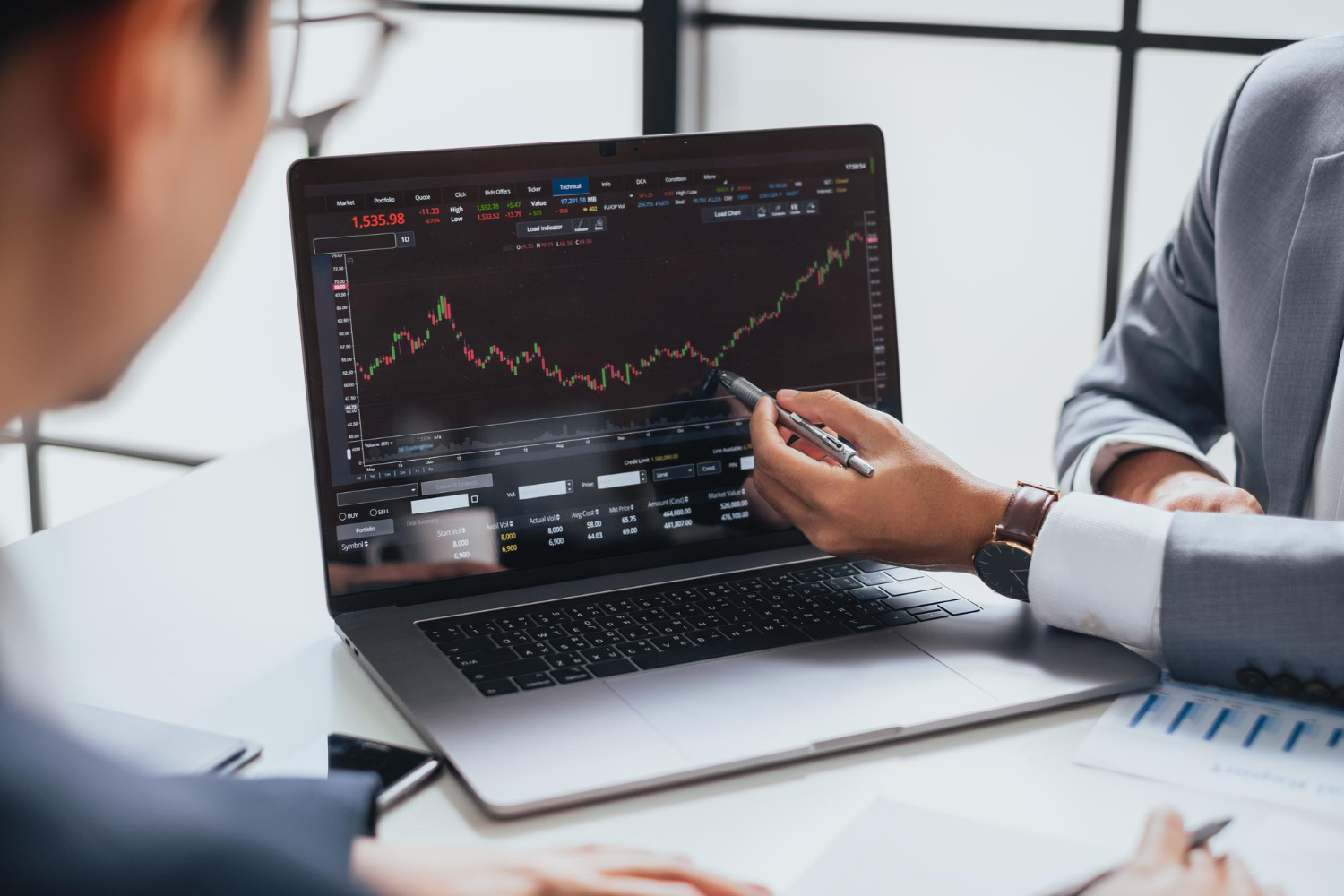

In the fast-paced world of Forex and CFDs, leverage emerges as a powerful tool that can significantly amplify trading outcomes. For Filipino traders, understanding and effectively utilizing leverage is crucial, as it can enhance buying power and potential returns. This article delves into the mechanics of leverage, its benefits and risks, and the strategic approaches employed by Filipino traders to navigate the complexities of the market. Discover how these techniques can reshape your trading journey and optimize your investment strategies.
Definition of Leverage
Leverage is a financial instrument that permits traders to borrow capital, thereby increasing their market exposure beyond their initial investment.
Traders determine leverage by dividing the total value of the investment by their own capital. For instance, with a leverage ratio of 10:1, an investment of $1,000 enables control over $10,000 in assets.
This mechanism not only amplifies potential gains but also increases risks. If the investment appreciates by 10%, resulting in a total value of $11,000, the profit would amount to $1,000, effectively doubling the investor’s original capital. Conversely, if the investment declines by 10%, the loss would be equally substantial, emphasizing the critical importance of risk management and the necessity of a well-considered strategy when utilizing leverage.
Importance of Leverage in Forex and CFDs
In the Forex and CFD markets, leverage plays a critical role, enabling traders to enhance their profit potential while managing larger trading volumes. For example, many Forex traders utilize an average leverage ratio of approximately 50:1, which permits them to control a position size of $50,000 with only $1,000 in their trading account.
While leverage can significantly amplify gains, it is essential to remain aware of the associated risks; losses can be equally magnified, potentially leading to a rapid depletion of capital. To effectively manage this risk, it is advisable to employ stop-loss orders and adhere to prudent risk management strategies.
One recommended practice is to limit the risk taken on a single trade to no more than 1-2% of the total account balance. This disciplined approach can contribute to stabilizing trading performance over time.
Understanding Forex and CFDs
Before exploring leverage, it is essential to comprehend the fundamental concepts of Forex trading and Contracts for Difference (CFDs).
What is Forex Trading?
Forex trading entails the exchange of currency pairs within a global marketplace, where traders seek to profit from fluctuations in exchange rates. This market is distinguished by its remarkable daily trading volume of approximately $6.6 trillion, establishing it as the largest financial market in the world.
Traders typically engage in the buying and selling of pairs such as EUR/USD or GBP/JPY, speculating on the relative value of the currencies involved. To initiate trading, one may utilize platforms such as MetaTrader 4 or 5, which provide analytical tools and access to a diverse range of market pairs.
It is advisable to consider demo accounts for practice purposes, enabling individuals to familiarize themselves with trading strategies without incurring financial risk.
What are Contracts for Difference (CFDs)?
Contracts for Difference (CFDs) provide traders with the opportunity to speculate on the price movements of various financial instruments without the necessity of owning the underlying asset. CFDs function by allowing traders to enter into a contract with a broker, wherein they agree to exchange the difference in the asset’s price from the time the contract is initiated until its closure.
This mechanism enables trading across a diverse range of instruments, including indices such as the S&P 500, commodities like gold and oil, and individual stocks, all without requiring substantial capital investments.
A notable advantage of CFDs compared to traditional trading is the capacity to leverage one’s position. This leverage can potentially amplify gains; however, it also heightens the associated risks. Furthermore, CFDs often permit shorter trade durations, thus providing flexibility in a rapidly changing market environment.
Leverage Mechanics in Trading
A thorough understanding of leverage mechanics is crucial for traders to effectively manage their risk and optimize their potential returns.
How Leverage Works
Leverage enables traders to control larger positions by utilizing margin, which constitutes a percentage of the total trade size required to initiate a position. For instance, with a 1% margin, a trader can manage a $10,000 position with an investment of only $100.
Consequently, if the asset’s price increases by a mere 1%, the trader could achieve a profit of $100, effectively doubling their initial investment.
It is important to recognize that leverage also magnifies potential losses. Should the asset’s value decline by 1%, that same $100 margin would result in a total loss of the initial investment.
Therefore, comprehending the mechanics of leverage and implementing stop-loss orders are critical strategies for mitigating risk in trading activities.
Margin Requirements
Margin requirements dictate the amount of capital that a trader must maintain in their account to support leveraged positions, thereby influencing trade decisions.
In Forex trading, margin requirements typically range from 1% to 2%. For example, if a trader initiates a position valued at $10,000 with a 1% margin, they are required to have $100 in their account.
In contrast, Contracts for Differences (CFDs) may demand margins of up to 10%. This means that for a $10,000 trade, a trader would need to maintain $1,000 in their account.
Failure to uphold these margin levels can result in a margin call, which necessitates that the trader either deposit additional funds or close positions to mitigate risk. This highlights the critical importance of diligent capital management.
Benefits of Using Leverage
Leverage can substantially increase a trader’s purchasing power and create opportunities for potentially higher returns on investment.
Increased Buying Power
Effectively utilizing leverage can significantly enhance a trader’s buying power, enabling them to assume larger positions within the market. For instance, if a trader possesses $1,000 and employs a leverage ratio of 10:1, their buying power expands to $10,000.
The formula for calculating buying power is expressed as follows: Buying Power = Account Equity x Leverage Ratio.
By comprehending this concept, traders can strategically amplify their investments. For example, if a trader identifies a stock priced at $50, they would be able to purchase 200 shares rather than just 20.
However, it is imperative to manage risk, as increased leverage also magnifies potential losses, underscoring the necessity of disciplined stop-loss orders.
Potential for Higher Returns
Utilizing leverage increases the potential for higher returns, allowing traders to capitalize on smaller market movements.
For instance, consider a trader who invests $10,000 in stocks without leverage, anticipating a 10% return. This results in a profit of $1,000. Conversely, if the trader employs 2:1 leverage, investing $20,000, a 10% market movement would yield a profit of $2,000.
However, it is important to note that while leverage amplifies gains, it also magnifies losses. If there is a market downturn, the unleveraged trader would incur a loss of $1,000, whereas the leveraged trader, still accountable for the $20,000 position despite a 10% decline, would experience a loss of $2,000.
Therefore, leveraging strategies should be approached with caution and used judiciously.
Risks Associated with Leverage
While leverage provides numerous advantages, it also entails considerable risks that traders must comprehend in order to prevent significant financial losses.
Potential for Greater Losses
The utilization of leverage can lead to significantly amplified losses, potentially exceeding the initial capital investment if not effectively managed.
For example, consider an investor who applies 4x leverage to acquire $10,000 worth of stocks. If there is a 25% decline in the stock price, the value of the investment decreases to $7,500.
Given that the investor originally invested only $2,500 and borrowed $7,500, the resultant loss relative to the initial investment equates to a complete 100% loss of capital.
Implementing risk management tools, such as stop-loss orders, may assist in mitigating these risks; however, it is essential to comprehend the potential for rapid loss escalation prior to engaging with leverage.
Market Volatility Impact
Market volatility can significantly affect leveraged positions, potentially resulting in rapid gains or losses within a brief timeframe. For instance, during the market crash of 2020, a trader utilizing 5x leverage on a highly volatile stock could have experienced a complete erosion of their equity in just a few hours.
To mitigate this risk, it is imperative to implement stop-loss orders, which automatically liquidate a position when it reaches a predefined loss threshold. This strategy serves to safeguard investments from extreme downturns.
Historical data indicates that traders who consistently utilize stop-loss orders tend to outperform those who do not, particularly in turbulent market conditions.
Strategies Employed by Filipino Traders
Filipino traders utilize a range of strategic methodologies to leverage effectively while simultaneously managing the risks associated with trading.
Risk Management Techniques
Effective risk management techniques are essential for Filipino traders aiming to mitigate potential losses associated with the use of leverage.
One crucial strategy involves the implementation of stop-loss orders, which automatically close a trade once it reaches a predetermined loss level. For example, if a trader purchases a stock at PHP 100 and sets a stop-loss at PHP 95, the potential loss is limited to 5%. Additionally, careful position sizing is vital; it is generally advisable to risk only 1-2% of one’s trading capital per trade to safeguard against significant drawdowns.
Research indicates that these techniques can enhance long-term trading success by up to 30%, thereby proving invaluable in the management of risks linked to leveraged trading.
Diversification of Investments
Diversifying investments across various asset classes is an effective strategy for Filipino traders to mitigate risk when employing leverage in their trading approaches.
For example, a Filipino trader may consider allocating 40% of their portfolio to equities, 30% to fixed-income securities, and 30% to commodities such as gold or oil. This method serves to minimize the effects of market volatility on the overall portfolio.
Research indicates that a well-diversified portfolio can enhance annual returns by approximately 2-3%, while simultaneously reducing risk exposure by nearly 15%.
To facilitate the implementation of this diversified strategy, traders may utilize platforms such as:
- COL Financial for equities,
- PhilStocks for fixed-income securities,
- Spot Gold for commodities.
These platforms provide the necessary tools to effectively execute a diversified investment approach.
Final Thoughts on Leverage in Trading
Successful trading leverage requires a disciplined strategy, robust risk management practices, and a commitment to ongoing education. It is essential to begin by establishing a comprehensive trading plan that outlines clear entry and exit points, which serves to mitigate emotional decision-making. Utilizing tools such as TradingView for charting and analysis is advisable, and setting up alerts can further aid in maintaining discipline throughout the trading process.
Risk management is of paramount importance; implementing the 1% rule can effectively limit losses on individual trades. By restricting risk to 1% of your capital on any single trade, you protect your portfolio from substantial drawdowns.
Additionally, continuous education through online courses or webinars is vital for refining trading strategies and adapting to evolving market conditions.
Frequently Asked Questions
What is leverage and how do Filipino traders use it in Forex and CFD trading?
Leverage is a tool that allows traders to control a larger position in the market with a small amount of capital. Filipino traders use leverage to increase their potential profits in Forex and CFD trading by borrowing funds from their broker.
How do Filipino traders determine the right leverage ratio to use in Forex and CFD trading?
Filipino traders must carefully assess their risk tolerance and trading strategy before selecting a leverage ratio. It is important to only use leverage that they are comfortable with and can manage effectively to avoid excessive losses.
What are the potential risks of using leverage in Forex and CFD trading for Filipino traders?
The main risk of using leverage is the potential for larger losses if the market moves against the trader’s position. It is important for Filipino traders to have a solid risk management plan in place when using leverage to minimize potential losses.
Can Filipino traders use different levels of leverage for different trading positions in Forex and CFDs?
Yes, Filipino traders have the flexibility to choose different leverage levels for different trading positions. This allows them to manage their risk and exposure according to their individual trading strategies and market conditions.
How can Filipino traders maximize their returns using leverage in Forex and CFD trading?
Filipino traders can use leverage to open larger positions and potentially generate higher profits. However, it is important to remember that leverage also amplifies losses, so it should be used carefully and in combination with effective risk management strategies.
Are there any restrictions or limitations on leverage for Filipino traders in Forex and CFD trading?
There may be certain limitations or restrictions on leverage for Filipino traders, depending on their broker and the regulatory environment. It is important for traders to always check and understand their broker’s leverage policies and abide by any relevant regulations.

